
The $25M Lift Problem: Why Ski Resorts Need Real-Time Operational Intelligence
INDUSTRY INSIGHT • 2026
From peak-day congestion to long-term CapEx strategy, how movement data can unlock smarter mountain economics
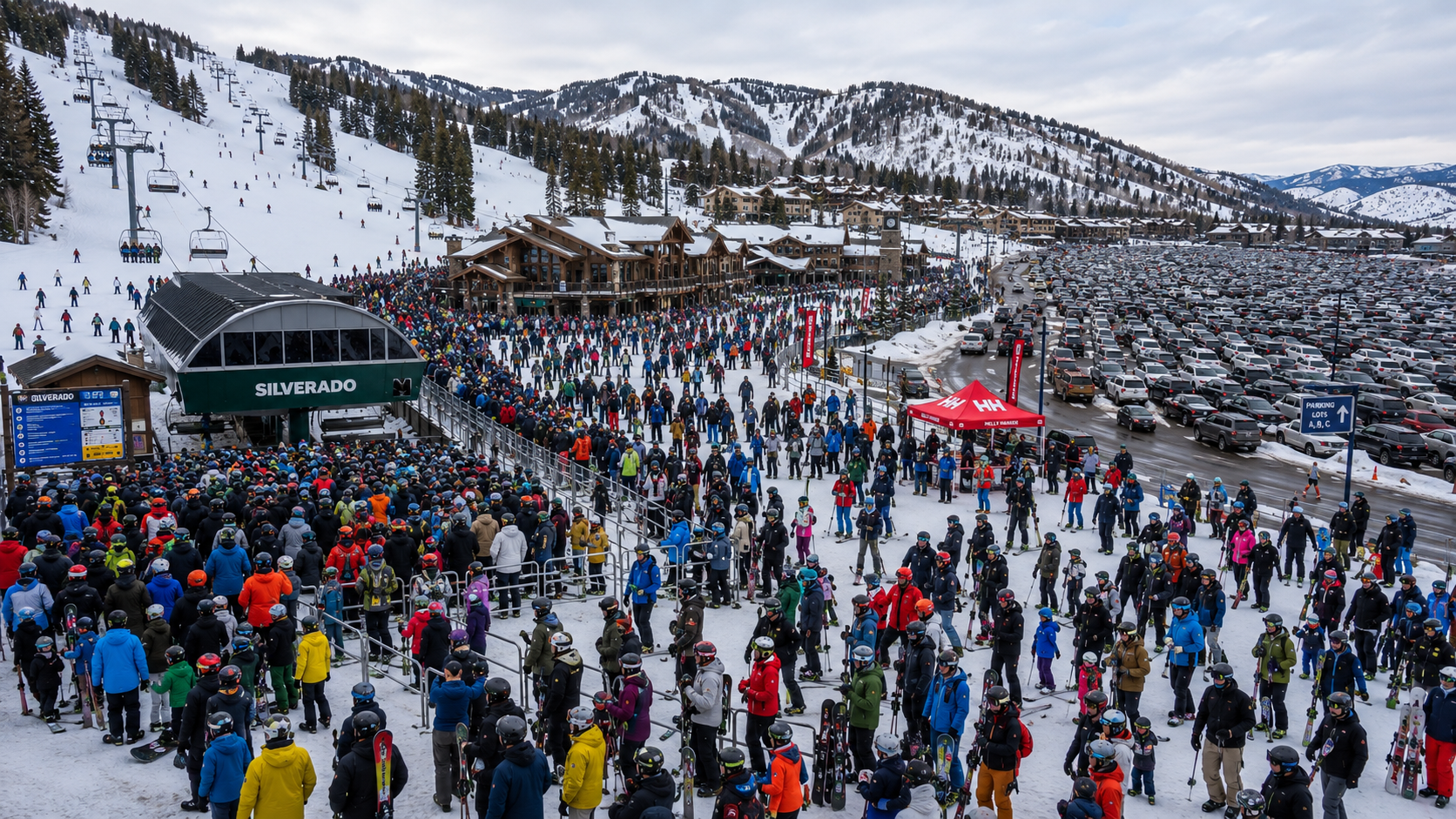
On a powder Saturday, everything feels full. Lift lines look long. Lodges feel packed. Parking looks chaotic.
But "feels" isn't a metric.
Behind the scenes, ski resort operators are making multimillion-dollar decisions with fragmented visibility. And in today's capital environment, the stakes are enormous.
A single high-speed lift can cost $25M+1, and requires years of planning, permitting, and construction. Once approved, that capital is locked in.
But here's the real question:
What if the problem isn't lift capacity but lift distribution?
The Throughput Dilemma
This isn't a snow problem. It isn't a staffing problem. It's a distribution problem.
When guests clump at a few high-profile assets, the symptoms compound quickly:
But if a resort can increase throughput at existing assets even modestly, the financial impact is massive. Deferring a $25M1 lift by even a few years can represent millions in time-value-of-money savings.
The Mountain Is Covered in Cameras. It's Still a Black Box.
"Ski resort cameras are real-time mirrors. They tell you where the lines were, not real-time intelligence that actually helps you move people and fix problems while they're happening."
Derek Egbert Former VP of Operational Insights, Vail ResortsWalk any major resort and you'll see cameras everywhere: lift bases, base lodges, parking lots, terrain parks. They're used for safety and security. Operationally, they're silent.
Resorts rely on ticket scans, radio calls, and team intuition to manage peak flow. But none of those systems measure real-time guest movement across assets.
Without movement intelligence, distribution can't be managed.
Imagine if your existing safety cameras did the counting for you. By layering Vision AI over the CCTV you already have installed, resorts could move from "I think we're busy" to "We have 342 people in the North Quad line with a verified 9-minute wait."
What Vision AI Could Unlock for Resorts
Safari AI connects to existing security cameras and transforms raw video into real-time pedestrian analytics, without replacing hardware or disrupting operations.
- Dynamically reassign lift operators as crowd density shifts in real time
- Open overflow lanes earlier, before the queue becomes a complaint
- Redirect guests through signage or app notifications to underused assets
- Adjust terrain park staffing based on live foot traffic data
- Identify overcrowding before it peaks and act while the window still exists
- Adjust kitchen staffing in real time based on observed lodge density
- Trigger overflow seating plans automatically when thresholds are crossed
- Rebalance food prep across outlets to match actual, live distribution
- Monitor queue buildup in 5–10 minute intervals at every counter
- Alert managers when thresholds are crossed, before the line becomes a social media post
- Quantify average dwell time to set realistic staffing benchmarks by event type
- Identify structural bottlenecks in layout that can't be solved by more staff alone
- Real-time lot occupancy and pedestrian movement data to redirect arrivals earlier
- Optimize shuttle frequency based on live parking saturation rather than a fixed schedule
- Predict surges before lift lines form, using base-area headcount as an early signal
- Understand true base-area load vs. ticket scans to close the gap between perception and reality
The Opportunity
Mountains already have the infrastructure.
They already have the cameras.
They already have the operational complexity.
The missing layer is real-time movement intelligence.
Safari AI has helped operators in other high-foot-traffic environments turn existing cameras into operational intelligence.
We believe ski resorts represent one of the most compelling next frontiers.
If you operate a ski resort and are thinking about how to improve lift throughput, F&B performance, or base-area flow, we'd love to explore what's possible together.
The Intelligence Is Already in Your Infrastructure
Every camera already installed across your mountain is a potential real-time data source. Safari AI turns that existing infrastructure into a continuous operational intelligence layer with no new hardware, no rip-and-replace, and no guesswork.
Join the venues, franchises, and operators already using Vision AI to run smarter, more responsive operations from day one.
1 Capital investment figures derived from National Ski Areas Association (NSAA) annual reports and industry coverage in SKI Magazine and SGB Media. The $754M estimate reflects aggregated lift and infrastructure spending across U.S. ski areas for the 2023–24 season.
2 Per-skier-visit CapEx average derived from NSAA financial benchmarking data and operator disclosures. Figures vary significantly by resort size; $29 represents an industry mid-range estimate.
