
From Gut Feel to Real-Time Data: How Elite Eleven Uses Vision AI to Outsmart the Manhattan Retail Market
CLIENT STORY • 2026
Why most retail conversion data is built on a flawed foundation, and what accurate foot traffic measurement changes.
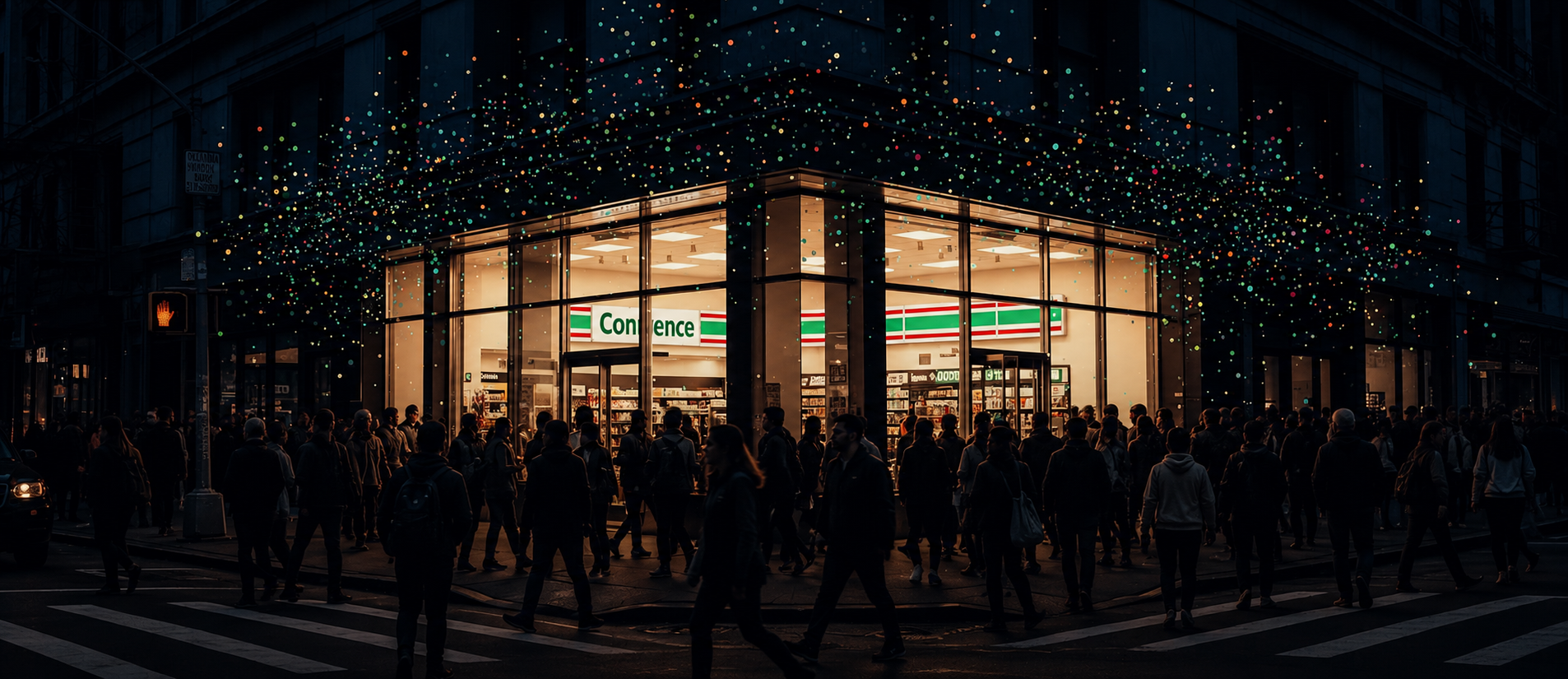
For decades, validating a retail location was surprisingly primitive. Operators stood outside storefronts with a clipboard and manual counter, measuring pedestrian traffic during a handful of short windows and extrapolating those numbers across an entire day.
For Elite Eleven Group, the franchise operator behind 10 Manhattan 7-Eleven locations, that approach introduced too much uncertainty for decisions involving long-term real estate commitments. Jag Rajpal, Partner and COO of Elite Eleven, described the process.
"We would pick up two or three slots in a day... and deploy people who would go at those assigned predetermined time frames. Just using a ticker counter, literally counting pedestrians."
The Largest Impact Has Been Before the Lease Is Ever Signed
In Manhattan's competitive real estate market, landlords frequently present foot-traffic estimates to justify rent levels. Those estimates are often derived from manual counting methods: spot observations extrapolated across an entire day.
The problem with extrapolation is asymmetric. An overestimated foot-traffic figure does not just skew a projection; it can transform what looks like a viable location into a structurally loss-making one. A 20% overstatement in pedestrian volume can mean the difference between a store that covers its operating costs and one that generates a six-figure annual loss. Elite Eleven experienced the consequences of this firsthand.
"We have been bitten hard because at times landlords tout themselves that they also have similar data... only to later find out the data gathering was again a manual driven process."
Instead of relying on landlord reports, Elite Eleven now gathers its own verified pedestrian data. Before committing to a lease, the team installs a temporary camera outside the prospective location. Safari AI connects to the camera and processes video locally and securely, transforming raw footage into continuous pedestrian analytics.
The critical distinction is temporal granularity. Manual counts capture a location at its best: a busy morning window, a peak lunch period. Continuous measurement captures the full picture, including the dead evening hours, the seasonal lulls, and the tourist corridors that look vibrant by day but see near-zero foot traffic after 7pm. That full-cycle picture is what separates a confident lease decision from an expensive assumption.
"When we're negotiating a lease, now I have very confident data telling me how many pedestrians pass that storefront in a 24-hour cycle. It helps me do a better negotiation, a more confident negotiation."
The Capture Rate Metric
For existing stores, Elite Eleven tracks a key operational metric: Capture Rate. Capture Rate measures the percentage of pedestrians passing a storefront who actually enter the store. With continuous pedestrian counting and entrance analytics, the management team can benchmark performance across locations on a consistent, verified basis.
A high-traffic location with a low capture rate has a different problem than a low-traffic location with a high one. The former may have a visibility, merchandising, or signage issue; the latter may be traffic-constrained and require a different intervention entirely. Without accurate pedestrian volume data, those two situations look the same from transaction records alone.
Over time, this dataset becomes a valuable operational benchmark for retail corridors, informing everything from store design decisions to staffing levels and lease renewal strategy.
- Store performance comparison across locations
- Sales forecasting grounded in real traffic volume
- Lease negotiation strategy and renewal decisions
- Real estate portfolio optimization
The Cost of Being Wrong
A retail lease in Manhattan is not a short-term commitment. Operators typically sign agreements spanning five to ten years, locking in rent obligations against projections made before a single customer walks through the door.
The consequence of a bad assumption is not a single bad quarter. It compounds annually across the full lease term. When manual traffic counts overstate pedestrian volume, as they routinely do by sampling peak windows, the projected economics of a location can diverge sharply from its operational reality.
The intelligence required to make that determination costs a fraction of the risk it eliminates.
Stop Guessing Before You Sign the Lease
Elite Eleven didn't change how they think about locations.
They changed what they know.
With a short, no-disruption pilot, they turned existing security cameras into a 24/7 data engine that revealed real pedestrian volume, real capture rates, and real competitive threats. If you're making decisions based on samples, averages, or landlord decks, you're negotiating blind.
Every prospective location can be evaluated on verified data before a lease is signed. Every existing location can be benchmarked on a capture rate that reflects what's actually happening outside the door.
Accurate Pedestrian Data Starts with the Cameras You Already Have.
Safari AI connects to existing security cameras using a small plug-and-play edge device. Video is processed locally and securely, transforming raw footage into continuous pedestrian analytics with no new infrastructure and no disruption to operations.
Join the franchise operators, multi-site retailers, and real estate teams already using Safari AI to negotiate leases, benchmark locations, and make site decisions on data they can defend.
