
People Counts: Why Camera Vision AI Is Essential for Modern Retail
RETAIL OPERATIONS INSIGHT • 2026
Why most retail conversion data is built on a flawed foundation, and what accurate foot traffic measurement changes.
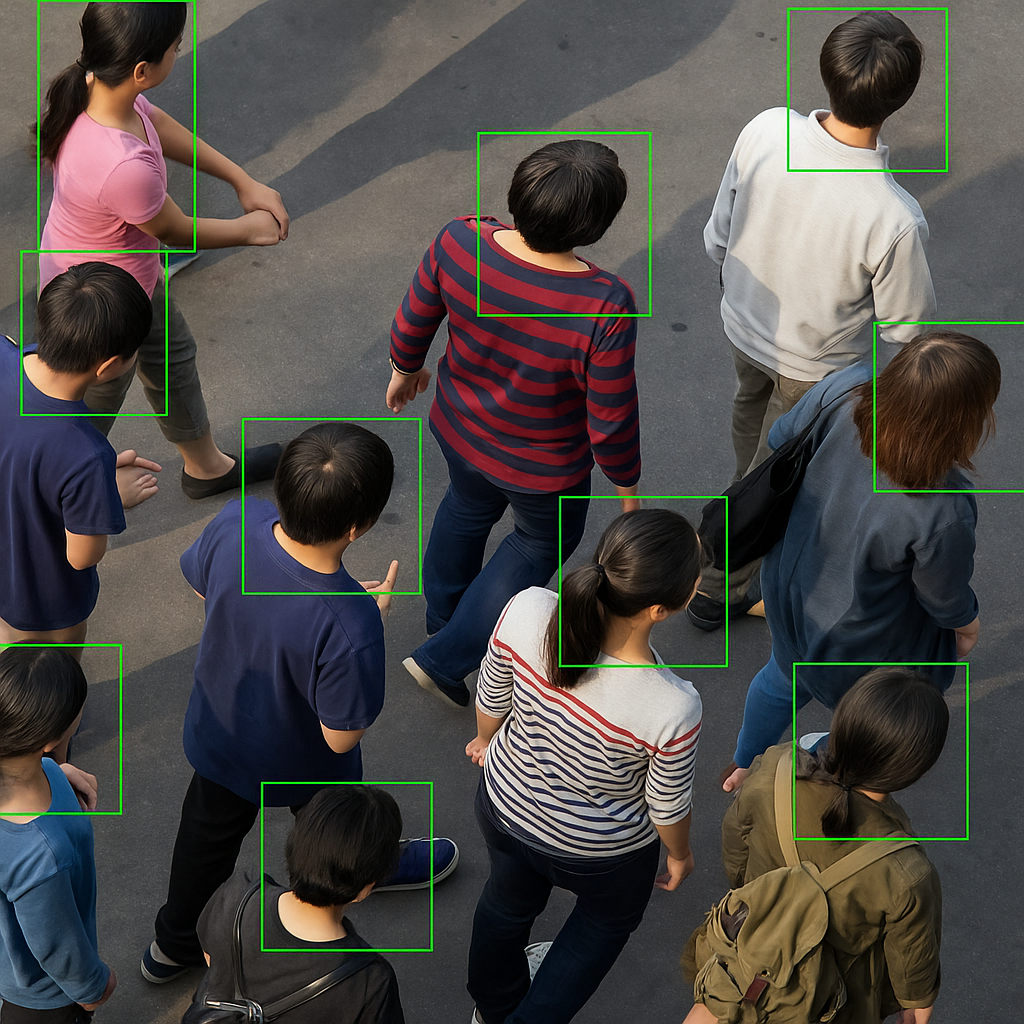
Camera vision AI revolutionizes people counts with real-time foot traffic analytics. Get precise pedestrian counting data to improve retail operations and customer experience.
Every decision a retail operator makes traces back to a single question: how many people actually walked through the door? Staffing levels, product placement, and marketing effectiveness all depend on an accurate count of visitors.
For most retailers, the honest answer is that they don't know. They have estimates, door sensor tallies that can't distinguish a customer from an employee, manual counts from a team member with a clicker standing at one entrance during a four-hour window, and infrared beams that trigger on shopping carts as readily as on people. What they don't have is accurate, continuous, actionable data about the flow of people through their space.
Camera vision AI has changed that equation by deploying computer vision models on existing security infrastructure, giving retailers access to real-time, zone-level foot traffic intelligence that was simply unavailable five years ago. The question is no longer whether to measure people counts, but whether you're measuring them accurately enough to make decisions that compound over time.
Every Counting Method Has a Failure Mode. Most Are Silent.
The problem with traditional people counting isn't just imprecision; the imprecision doesn't announce itself. A door sensor undercounting groups doesn't flag an error.3 A manual tally from Tuesday afternoon doesn't warn you it's unrepresentative of Saturday peak hours. The data looks authoritative, but the decisions built on it are not.
| Method | Core Limitation | What It Costs You | Accuracy |
|---|---|---|---|
| Manual counting | Human error, coverage gaps, no off-hours data | Staffing models built on unrepresentative samples | Low |
| Door beam sensors | Cannot separate customers from staff; groups count as one entry | Conversion rates that are structurally wrong | Low–Med |
| Infrared counters | Triggered by carts, strollers, and bags as readily as people | Overcounts that mask real traffic patterns | Medium |
| Overhead 2D sensors | Crowd occlusion with no behavioral context | Accurate totals without zone-level or dwell intelligence | Medium |
| Camera vision AI | Requires existing camera coverage, which is usually already present | N/A | High |
The compounding problem is straightforward: every model, benchmark, and forecast built on inaccurate visitor data drifts further from reality with each iteration. Staffing ratios, layout assumptions, and conversion benchmarks all inherit the original measurement error and stay wrong for as long as the data source stays wrong.
Four Decisions That Change When the Data Is Right
The value of precise foot traffic data is not the number itself. It is the operational decisions that become possible, and defensible, once the foundation is solid.
The Same Measurement Gap Across Every High-Traffic Environment
Inaccurate visitor data undermining operational decisions is not a retail-specific problem. Wherever foot traffic drives resource allocation, the same camera vision AI infrastructure applies, and the same compounding cost of imprecision accrues when it doesn't.
- Accurate conversion rate calculation at the zone level
- Staffing models grounded in measured peak periods
- Layout decisions backed by actual traffic flow data
- Marketing lift measured against clean baselines
- Category-level traffic data to inform tenant positioning
- Rental rate negotiations supported by verified pedestrian counts
- Security and maintenance scheduling by measured occupancy
- Seasonal performance tracked with precision
- Kitchen prep scaled to actual walk-in traffic patterns
- Wait time management from real-time occupancy data
- Revenue per seat-hour benchmarked against measured turns
- Staff scheduling validated against observed peaks
The Opportunity
You already have the cameras.
You already have the foot traffic.
You already have the revenue to recover.
The missing layer is measurement you can actually act on.
Every week a retail operation runs on estimated visitor counts is a week where staffing decisions, layout assumptions, and marketing attribution are built on a foundation drifting from reality. The gap between what's happening in your store and what you believe is happening is the gap between the revenue you're generating and the revenue that's available.
Retailers who instrument their foot traffic data early don't just run their first quarter better. They build the benchmark dataset that makes every subsequent quarter sharper, and they generate the evidence base for capital decisions that would otherwise be anecdote-driven and slow to approve.
Your Cameras Are Already a People Counting System. They Just Need the Intelligence Layer.
Every security camera already installed in your retail environment is a potential source of accurate, real-time foot traffic data. Safari AI turns that existing infrastructure into a continuous people counting engine with no new hardware, no manual effort, and no estimation.
Join the retailers, property operators, and commercial venue managers already using Vision AI to make staffing, layout, and marketing decisions on data they can trust.
Citations
1 Manual counting error rate of ±15% at peak periods is consistent with benchmarks published by the Retail Analytics Council and referenced across retail operations literature. High-volume periods compound human counting error due to simultaneous multi-entry events; the figure represents a conservative estimate of the commonly cited ±10–20% range.
2 Conversion rate improvement range of 2–5% following implementation of accurate foot traffic measurement is derived from case study data compiled across retail deployments reported by ShopperTrak and the Retail Sensing industry benchmarking reports. Actual improvement varies by store format, baseline accuracy of prior counting method, and operational responsiveness to data.
3 Door beam sensor undercounting characteristics are documented across multiple retail technology evaluations, including studies published by the British Retail Consortium and the Retail Analytics Council. Bidirectional flow errors and group-entry undercounting are well-established limitations of single-beam and dual-beam infrared sensor technology.
4 The 15% foot traffic threshold for identifying underperforming store zones is a commonly applied benchmark in retail space productivity analysis, referenced in work by Envirosell (now Behavioral Science Group) and in retail real estate optimization literature. The threshold is illustrative; optimal thresholds vary by store format and category mix.
